

Candy brands that want to scale from small batches to store shelves nationwide face one central question: how do they keep quality consistent while output climbs? The answer almost always comes down to the equipment on the factory floor. A dependable candy making machine forms the backbone of any mass-production line, controlling temperature, texture, and shape with a precision that manual methods cannot match. For manufacturers planning an expansion or launching a new production facility, understanding what separates basic tooling from true high-volume systems makes the difference between a bottlenecked line and a factory that runs around the clock.
This guide walks through what mass production really demands, the equipment categories worth understanding, and the practical steps that help a growing candy business choose the right setup for long-term output goals.
Why Mass Production Demands the Right Candy Making Machine
Small-batch cooking methods work fine for a boutique operation selling a few hundred units a week. Once demand grows into the thousands or millions, though, manual cooking, cutting, and wrapping simply cannot keep pace. Temperature swings of even a few degrees change texture, consistency, and shelf life, and human fatigue introduces variability that retailers and consumers notice quickly.
Automated systems change this equation. Consistent cooking temperatures, automated depositing, precise cutting, and synchronized wrapping stations let a facility multiply output without multiplying its workforce at the same rate. Every stage — cooking, forming, cooling, cutting, and packaging — needs equipment engineered for continuous cycles, not just occasional runs.
Key Components of Modern Candy Processing Equipment
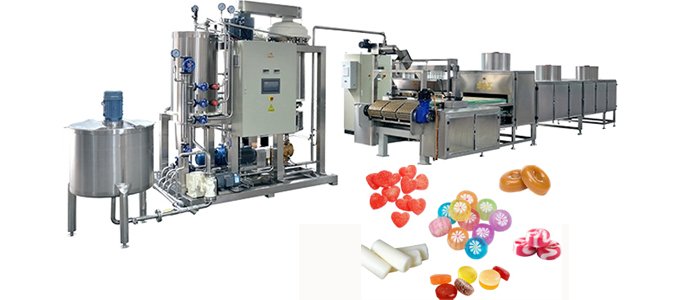
A complete production line rarely relies on a single machine. Instead, it combines several purpose-built units into one continuous process:
- Systems for cooking and cooling that control the sugar temperature with very little change
- Machines that deposit and reshape candies according to the desired specifications
- Equipment that cut and sizes the candies into the desired pieces
- Lines for wrapping and packaging that are synchronized with the speed of the previous operation
When these pieces work together, a candy making machine setup becomes far more than the sum of its parts. It turns into a coordinated system capable of producing tens of thousands of units per shift while maintaining the same taste and appearance batch after batch. Manufacturers sourcing candy processing equipment for the first time often underestimate how much line balancing matters — a fast cooker paired with a slow wrapper still creates a bottleneck, no matter how advanced either machine is on its own.
How an Industrial Candy Machine Changes the High-Volume Equation
Not all candy equipment is built the same, and the gap shows up fast once volume climbs. A commercial-grade unit can handle a single shift fine, but round-the-clock production wears it down: seals fail sooner, temperatures drift, and recipes stop matching batch to batch.
An industrial candy machine is built to absorb that kind of pressure. Heavier components, programmable recipe controls, and the ability to link cooking, forming, and packaging into one automated flow are what set this tier apart from equipment meant for lighter use. Plants that make the switch, whether they run hard candy, gummies, or chewy pieces, usually notice it fast: fewer stoppages, quicker changeovers, and steadier batches.
Picking Equipment That Can Grow With You
Before buying anything, it helps to be honest about where production stands now, not just where it might be in a few years. A single-product line at moderate volume needs different equipment than one running three or four lines side by side.
This is where Melechine comes in. The company builds candy making machine setups for exactly this kind of scaling, from single-process units to fully integrated lines. Specs worth digging into include hourly output, automation level, and how well a new piece of candy processing equipment plays with what’s already on the floor. Working with a supplier like Melechine, one that thinks in whole lines rather than one-off machines, tends to save headaches – and money – once things are installed.
The Problems That Show Up Once Volume Ramps Up
Even a carefully planned line runs into trouble eventually – cleaning downtime piles up, sizes drift a little, and flavor changeovers eat into the day more than anyone budgeted for.
A lot of this comes down to design choices made earlier. Equipment with tool-free cleaning access and swappable modular parts cuts a good chunk of that maintenance time out entirely. Picking a candy making machine with built-in recipe storage helps too, since operators aren’t guessing at settings every time the line switches products – which keeps output steadier across a full shift.
Wrapping Up
Growing a candy operation isn’t really about hiring more people; it’s about getting the right systems in early. A solid candy making machine setup, backed by cooling, cutting, and packaging gear built for continuous runs, gives a plant the consistency and throughput needed to compete at scale, regionally or globally. Melechine builds toward that kind of growth, with options from single-stage machines to complete production lines.
Thinking about moving from limited-batch output to something more consistent and high-volume? Get in touch with Melechine to talk through which setup fits your line.
FAQs
1. Where do you even start with a high-volume line?
Figure out your target volume and what you’re actually producing, then look for equipment built for continuous, industrial-scale runs rather than occasional batches.
2. What actually makes something “industrial-grade”?
An industrial candy machine is meant to run multiple shifts back-to-back with programmable controls – a different animal than equipment built for occasional or low-volume batches.
3. What should I look for when shopping for equipment?
Good candy processing equipment should balance well with the rest of your line, be easy to clean, and connect properly with whatever sits upstream and downstream of it.
4. Do I need to replace my whole line to upgrade it?
Not necessarily. Plenty of plants add on a depositor or a wrapping unit here and there instead of tearing out an entire system at once.
5. Why does it matter where I source this kind of machine from?
Because scaling problems tend to show up later, not right away – picking an industrial candy machine that can grow with you from the start avoids expensive compatibility issues down the line.